
What I Learned from Studying with CIM—and Why It Made Me a Better Marketer
22.08.2026
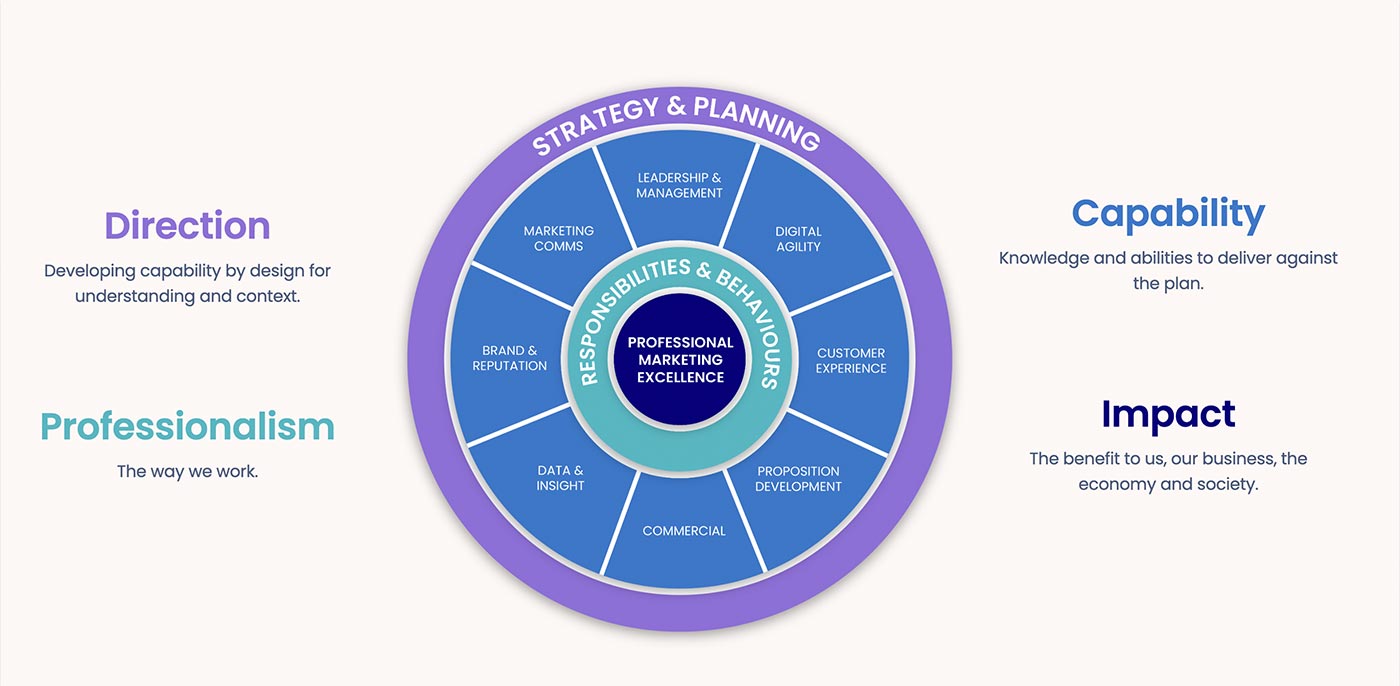
When I enrolled with the Chartered Institute of Marketing, I already had several years of hands-on experience, but I felt something was missing. I wanted to understand why some approaches worked, how to make better decisions and where I needed to develop. After researching my options, CIM felt like the right way to take my skills to the next level.
From practical skills to a bigger picture
My route into digital marketing began in graphic design. At the time, I thought of design as its own field rather than part of marketing. As my work expanded into websites, search visibility, paid advertising and social media, I learned a great deal through independent study and solving problems as they arose.
Studying with CIM helped me connect that experience to a broader framework. I began to see how each activity relates to the others and how they all contribute to a business goal. It also helped me recognise gaps in my knowledge that day-to-day work had not revealed, but the biggest change has been in how I approach the work. These are the lessons that have stayed with me.
1. I question a decision before I act on it
Previously, I might have focused on how best to deliver a particular activity. Now I first ask why we are doing it. What is the objective? Who is it for? How does it fit with everything else the business is doing?
That does not mean every decision needs a lengthy process. It means taking a moment to check that the work addresses the right problem. A well-executed campaign is only valuable if it moves the business towards something that matters.
2. I see marketing’s impact across the organisation
Studying helped me understand marketing on a larger scale. It is connected to what a business offers, how it serves customers, the promises it makes and whether it can deliver on them. Those decisions involve more than the marketing team. This has changed the way I look at a brief. If a business is struggling to attract or keep customers, the answer may involve its offer, customer experience or internal processes as well as its communications. Seeing those connections helps me ask better questions and work towards a more useful solution. I began to see marketing as a large puzzle made up of many connected pieces. Research, positioning, customer insight, brand, content, channels, technology, data and measurement all matter, but none works in isolation. Strong marketing is the process of selecting the right pieces and fitting them together for a particular business, market and customer.
A polished campaign can still solve the wrong problem. Effective marketing starts with the objective—not the tactic.
3. I follow a process, rather than jumping to creative ideas
Creativity remains one of the parts of marketing I enjoy most. CIM helped me see where it belongs within a structured process: understand the situation, set an objective, plan an approach, carry it out and evaluate what happened.
That structure gives creative work a clearer purpose. It helps me decide which ideas are worth pursuing, which channels make sense and how each activity supports the wider plan.
4. I plan, measure and keep improving
A plan gives direction, but it should not be treated as finished once the work begins. I have become more conscious of the need to monitor results, learn from them and make changes.
I now think about measurement while planning an activity, rather than only at the end. What would a useful result look like? What could the data tell us? What would we do differently next time? This makes improvement an ongoing part of the work.
What comes next
As of August 2026, I have completed CIM Level 4, including my final module in SEO and paid advertising, and enrolled on Level 6. I am looking forward to developing further in strategic marketing: making better decisions, thinking beyond short-term activity and understanding how marketing can create lasting value for a business. CIM did not make my previous experience less important. It made that experience more useful. It gave me language for ideas I had sensed, frameworks for decisions I had previously made instinctively and a clearer view of how individual activities contribute to the whole.
Keep reading for practical insights that will help you understand the topic more clearly, make informed decisions and turn useful ideas into meaningful action for your business.