
Every Company Is Digital Now: My Thoughts on Book by Alfonso de la Nuez
20.09.2026
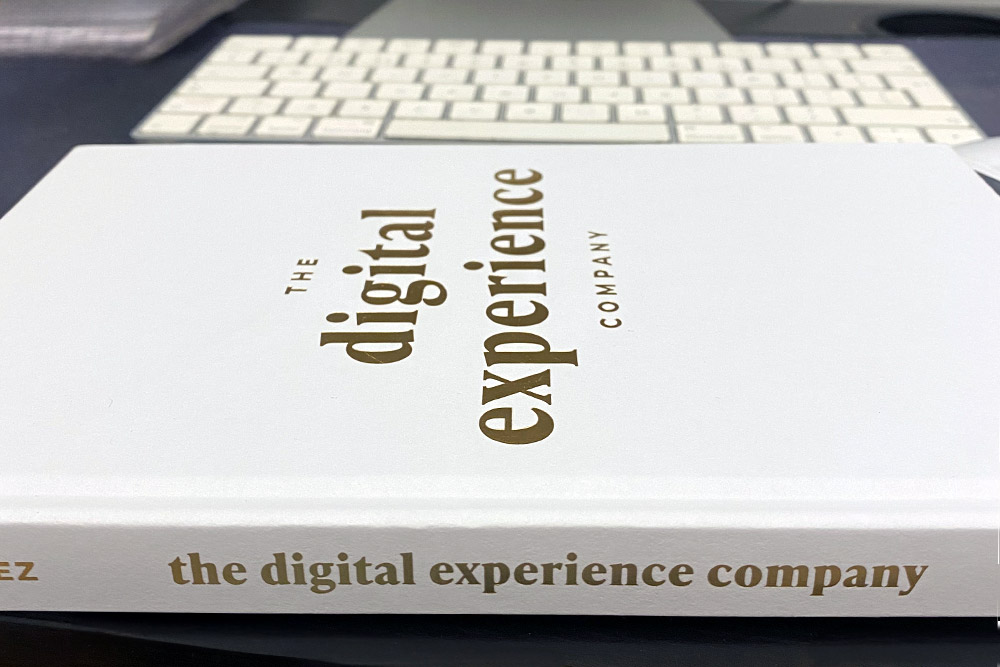
I’m currently reading "The Digital Experience Company " by Alfonso de la Nuez, and it has already given me plenty to think about.
As I read further, I keep connecting the book’s ideas to questions I consider in marketing: how customers find a business, what happens when they visit its website, and whether the experience lives up to the expectations its marketing creates. Someone who works with websites, UX and customer journeys may read the book differently from someone encountering those ideas for the first time. But the more I read, the more its central point stands out: customers encounter businesses digitally, whether or not those businesses think of themselves as digital.
You Don’t Have to Be a Tech Company to Be Digital
Imagine someone looking for a company to fit a new kitchen. They search online, compare businesses, read reviews and look through photos of previous projects. They visit a website to understand the process and submit an enquiry. They have not met anyone from the company yet, but they are already forming an opinion. Was the business easy to find? Did its work look credible? Could they understand what would happen next? Was it simple to get in touch? The company might see search, reviews, its website and enquiries as separate activities. The customer experiences them as one journey. For many businesses, digital is where the customer experience begins, even when the product or service is delivered in person.
For many customers, digital isn’t another part of the business experience. It’s where that experience begins.
UI, UX and CX are connected
De la Nuez explains how user interface (UI), user experience (UX) and customer experience (CX) connect. UI is the part of a digital product that someone sees and interacts with: its layout, colours, text, buttons, forms and navigation. UX is how someone experiences using that product, including whether it feels easy, confusing or frustrating. CX is broader: it is the impression a person forms through all their interactions with a company, from the first search to the service they receive afterwards.
For example, an enquiry form may look clear and be easy to use, but if nobody responds, the customer’s overall experience suffers. That is why CX needs to be part of business strategy. What happens on the website matters, but so do the decisions made by every team the customer encounters.
What Amazon Gets Right About Digital Experience
Amazon is an example of a business that has put considerable effort into making digital interactions convenient. Finding a product, checking delivery options, placing an order and tracking it feel like parts of one process. De la Nuez includes Amazon among the brands he discusses in connection with user-focused design.
I can see why he uses it as an example. I’ve been an Amazon customer for years, and when I need something, it is usually the first place I look. I can almost always find what I need, and often have it delivered the next day. I buy groceries there too, and Amazon Now has recently made it possible to get everyday essentials delivered in around 30 minutes where the service is available.
Prime gives me more reasons to stay: video, music, reading and discounted cinema tickets. I order often enough that the monthly subscription feels worthwhile compared with paying a delivery charge each time I shop elsewhere. For me, that is the point. The ease of shopping brought me to Amazon, but the convenience across all these different services has kept me there. That is what a connected customer experience looks like from the customer’s side
Digital has made it easier to create better customer experiences. It has also raised expectations of what a good experience should feel like.
The customer sees one company
A business is made up of different departments, people and systems, each responsible for a part of the work. The difficulty is getting those parts to work together. Marketing may focus on attracting enquiries, the website team on making the form easy to use, and sales on following up. If they are not coordinated, the customer feels the gaps between them.
Imagine an advert promising a quick, simple way to get started. The customer visits a clear website and completes an easy enquiry form. The UI and UX may work well up to that point. But if nobody responds promptly, or the sales team asks the customer to repeat information they have already provided, their overall experience suffers.
Each team may have completed its own task, yet the journey as a whole has failed to deliver on the promise. That is why CX needs attention across the business: the customer does not see separate departments; they see one company.
What I’m Taking From the Book So Far
I’m still reading The Digital Experience Company, so this isn’t intended to be a final review. It is more a collection of thoughts the book has already prompted, and perhaps that is why I am enjoying it. The ideas connect with questions I already find interesting: How do customers actually experience a business? Where does marketing stop and customer experience begin? How much does technology genuinely improve that experience? And are we collecting data because it helps us understand customers, or simply because we can?
The more I think about those questions, the harder it becomes to separate marketing, digital experience and customer experience into neat boxes. A campaign creates an expectation. The website continues it. The customer journey either supports it or gets in the way. The service ultimately has to deliver it. Different teams may own different parts, but they all contribute to the same customer experience.
Perhaps that is the bigger idea I am taking from the book so far. Creating a better digital experience isn’t necessarily about adding more technology, collecting more data or appearing on more channels. It is about understanding the customer well enough to make all those different pieces work together.
Keep reading for practical insights that will help you understand the topic more clearly, make informed decisions and turn useful ideas into meaningful action for your business.